
Wheel Guides
How to Install Brake Pads for Carbon Rim Brake Wheels
Jun
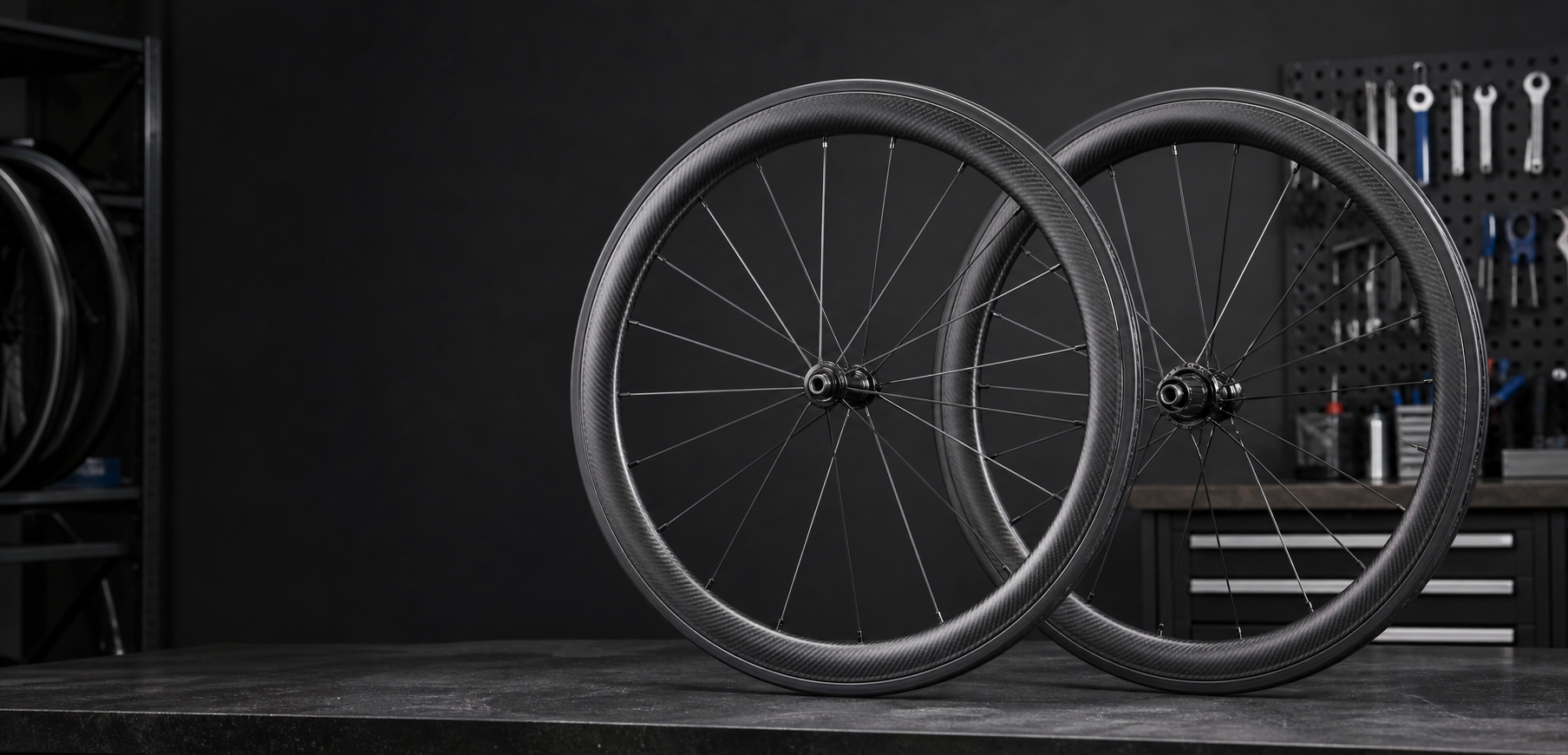
Installing brake pads for carbon rim brake wheels is a small job with a big effect on confidence. Pad compound, height, angle, and cleanliness all matter. A carbon brake track is not the same surface as an alloy rim, so the goal is simple: use suitable pads and make sure they contact only the braking surface.
Start with the right pads
Do not assume your old pads are ready to move over. Pads that have been used on alloy rims can hold tiny metal flakes from the old brake track. Those fragments may scratch carbon. Starting with fresh carbon-compatible pads is usually the cleanest and most predictable option.
| Carbon-specific pads | Use pads intended for carbon rim brake tracks. |
|---|---|
| Hex keys | Needed for pad holders and caliper adjustment. |
| Clean cloth | Useful for wiping pad holders and brake tracks. |
| Good lighting | Helps confirm pad height, tire clearance, and alignment. |
Remove the old pads carefully
Open the brake quick release if your caliper has one, then remove the wheel or create enough space to work. Loosen the retaining screw or fixing bolt, depending on your pad holder. Slide the old pad out and note its direction. Many cartridge pads are directional, and the replacement should follow the same front-to-back orientation.
Before installing the new pad, clean the inside of the holder. Dirt and dried grit can stop the new pad from sitting flat. If the holder is bent, heavily corroded, or does not secure the pad firmly, replace the holder rather than forcing it.
Align the new pads
- The pad should contact the brake track, not the tire sidewall.
- The full pad face should sit on the braking surface.
- The pad should not hang below the track.
- Both sides should contact the rim at roughly the same time.
- The wheel should spin freely after the brake lever is released.
Some riders add a very slight toe-in, where the front of the pad touches just before the rear. This can help reduce noise, but it should be subtle. Too much angle reduces contact area and can make braking feel uneven.
Final checks before riding
Spin the wheel and watch the gap between each pad and the rim. If the rim rubs at one point, confirm the wheel is seated correctly before adjusting the caliper. Squeeze the lever hard several times. The pad should not move in the holder, and the fixing bolt should stay secure.
If you are unsure about pad position, send photos through contact. For broader setup and fit questions, compare your frame with the compatibility guide. Good braking starts with clean contact.
Pad position matters as much as pad compound
Carbon-compatible pads are the starting point, but installation still matters. The pad should contact the brake track cleanly, not touch the tire, not hang below the track, and not hit at a strange angle. Poor placement can create squeal, weak braking, or uneven wear even with the right pad.
After installation, squeeze the brake and spin the wheel slowly. Check both sides and both wheels. Then do a short test ride before relying on the brakes during a fast descent or group ride.
