
Wheel Guides
First Steps After Your Carbon Wheelset Arrives
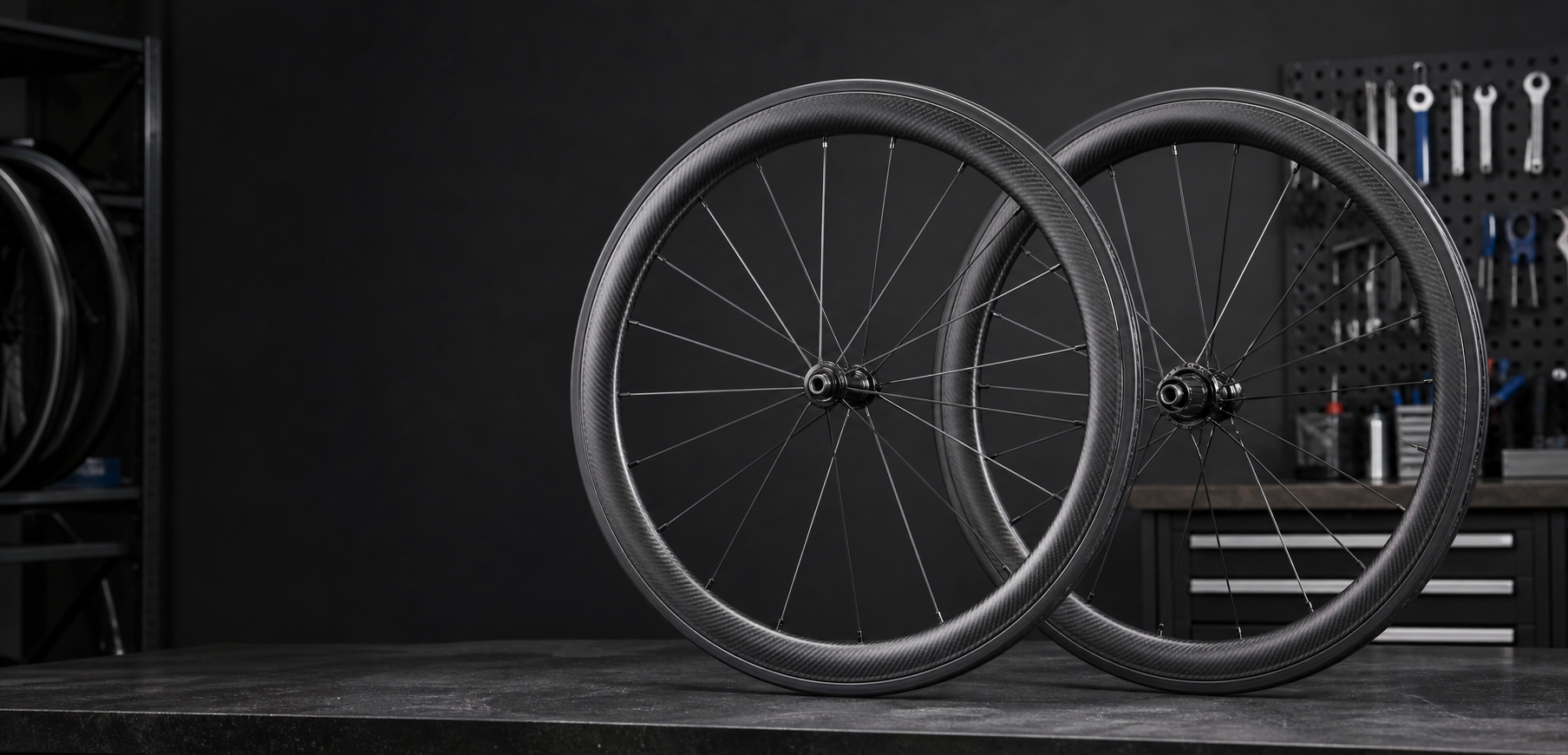
Jun
A new carbon wheelset is exciting, but the best first step is not to cut every tie and rush into a ride. Give yourself a clean bench, good lighting, and a few quiet minutes to inspect everything before tires, cassette, brake pads, and skewers go on.
Photograph the box before setup
Start with the outer carton and packaging. Look for crushed corners, tears, heavy dents, or signs that the wheels shifted in transit. Take photos before throwing anything away. If a support question comes up later, those first photos are much more useful than trying to describe the box from memory.
Then remove each wheel carefully and keep the packaging nearby until the wheelset has been checked. If anything looks wrong, stop before installation and contact support.
Check the wheelset visually
- Inspect the rim surface for cracks, deep scratches, dents, or unusual marks.
- Look closely at the carbon brake track before any pad contact.
- Spin each wheel by hand and listen for rubbing, loose pieces, or rough bearing sounds.
- Check that the valve hole is clean and the rim bed looks smooth.
- Confirm that the freehub body matches the cassette you plan to use.
Small cosmetic marks and true structural concerns are not the same thing. If you are unsure, take clear daylight photos and use contact. Do not mount tires or ride the wheels while a possible damage question is open.
Confirm compatibility one more time
Carbon rim brake wheels need the right frame clearance, brake pads, cassette, tire size, and valve length. If this is your first carbon rim brake setup, compare your bike with the compatibility guide. Pay special attention to brake pad type. Pads used on alloy rims can carry metal fragments and should not be used on carbon brake tracks.
If you are moving parts from an older wheelset, clean them first. A dirty cassette, worn chain, or old brake pads can make a new wheelset feel worse than it should.
First setup is not about speed. It is about confirming that every part touching the wheel is clean, compatible, and correctly aligned.
Before the first ride, choose a short route near home. Avoid making a fast descent or group ride the first test. Listen for rubbing, feel for brake pulsing, and recheck tire pressure and quick release tension when you return. For general setup questions, start with the FAQ.
Do not turn delivery day into installation day too quickly
It is tempting to mount tires immediately, but the first job is inspection. Photograph the box if it has any damage, unpack carefully, and keep all protective material until the wheels are checked. Look at the rims, hubs, spokes, brake tracks, valve holes, and freehub body before parts are installed.
After visual inspection, confirm the practical details again: correct freehub, correct brake pads, tire plan, and enough clearance on the bike. A mismatch found before installation is much easier to solve than one found after cassette marks and brake pad marks appear.
Make the first ride short
The first ride should be a test, not a long descent or fast group ride. Check braking, listen for rub, and inspect again afterward. If the box or wheel looks questionable, use contact before riding.
