
Wheel Guides
What to Do If a New Wheel Rubs the Brake Pads
Jun
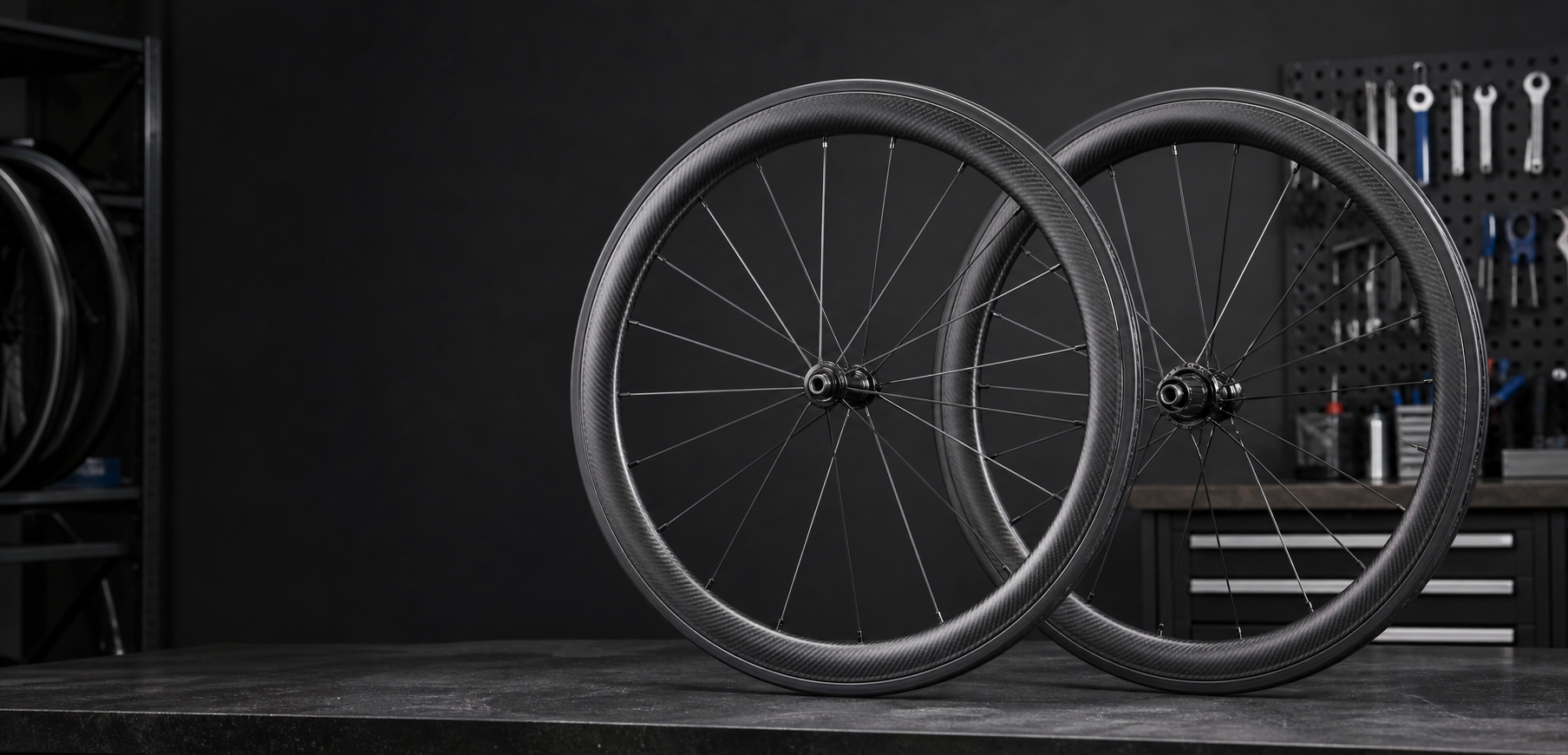
A new wheel rubbing the brake pads does not automatically mean the wheel is bad. Rim brake bikes are sensitive to small differences in rim width, wheel seating, caliper centering, and pad position. Work through the simple checks before assuming a defect.
Start with wheel seating
Open the quick release, press the wheel fully into the dropouts, and close it firmly again. A wheel that is slightly crooked in the frame can rub one pad even if the rim is fine. Do this with the bike on the ground or with steady downward pressure so the axle sits squarely.
Spin the wheel after reseating. If the rub disappears, the issue was installation, not the wheel. If the rub remains, look at where and how it happens.
Figure out the type of rub
| Constant rub on one side | The caliper may be off center, or the wheel may not be seated evenly. |
|---|---|
| Rub once per wheel rotation | Check tire bead seating, rim true, and whether the pad gap is too tight. |
| Both pads too close | The new rim may be wider than the old wheel and needs brake clearance adjustment. |
| Pad touches tire | The pad is too high and must be lowered before riding. |
Center the caliper carefully
Many rim brake calipers have a centering screw or can be centered by gently shifting the caliper body before tightening. Make small changes. Spin the wheel between adjustments. Do not create huge pad gaps to hide a setup issue; the brake should still feel firm and predictable.
Check pad height and angle
The pad should sit on the carbon brake track, not on the tire sidewall and not below the track. If the pad is angled badly, it can rub even when the wheel is centered. A slight toe-in can help noise, but too much angle can reduce contact and make braking feel uneven.
When to stop adjusting
If the wheel rubs heavily, the rim looks visibly damaged, the tire bead is uneven, or the brake track pulses under light braking, stop and inspect more carefully. Take photos of the wheel in the frame, the brake pads, and the clearance on both sides. Send them through contact before riding.
If you are checking fit before purchase, use the compatibility guide. Some older calipers have less room for modern rim widths, and it is better to know that before ordering from the shop.
Find out if the rub is constant or once per rotation
A constant rub often means the caliper is not centered, the quick release is not seated correctly, or the pads are too close. A rub that happens once per wheel rotation may point to tire seating, rim movement, or a local high spot. The fix depends on which kind of rub you have, so spin the wheel slowly and watch carefully.
Start with the simplest checks. Open and reseat the wheel, tighten the quick release correctly, center the caliper, and confirm pad height. Do not start adjusting spokes unless you know the rim itself is out of true and you are qualified to correct it.
When rubbing means stop
If rubbing appears with a visible rim deformation, damaged brake track, loose spoke, or tire bead issue, stop riding and ask for help. Send photos through contact before turning a small setup issue into a damaged wheel.
