
Wheel Guides
What to Know About Carbon Rim Brake Tracks
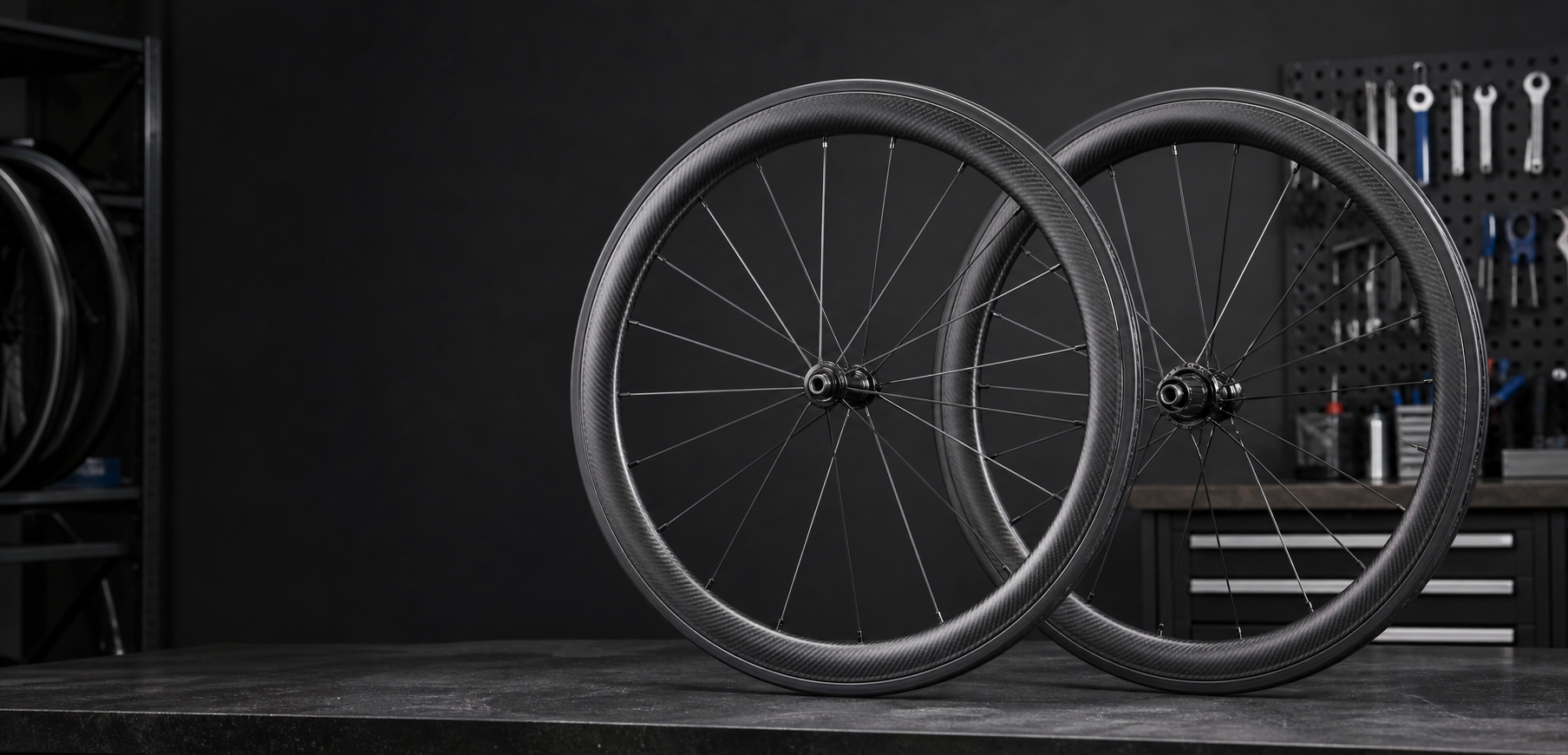
Jun
The brake track is the part of a rim brake carbon wheel that your pads actually touch. It looks like a small detail, but it decides a lot about braking feel, pad choice, maintenance, and how carefully the first setup should be done.
Carbon brake tracks are not alloy brake tracks
If you are moving from aluminum rims to carbon rim brake wheels, the biggest change is not only the look or the rim depth. Carbon braking depends more on pad compound, clean surfaces, heat management, and rider habits. The track needs the right pads and a clean setup from the first ride.
Do not move old pads from alloy rims onto carbon wheels. Pads used on aluminum can hold tiny metal fragments, and those fragments can scratch the carbon brake surface. Starting with suitable carbon rim brake pads is a small cost compared with damaging a new wheelset.
What should touch the track
- Only brake pads intended for carbon rims.
- No tire sidewall contact from a pad set too high.
- No pad hanging below the brake track.
- No grit embedded in the pad face after wet or dirty rides.
After installation, squeeze the levers and watch where the pads land. Then spin the wheel and make sure there is no rub. If you are not sure what you are seeing, send photos through contact before riding fast.
Heat is the part people underestimate
Rim brakes slow the bike by turning speed into heat at the rim. On flat roads and rolling terrain, this is usually straightforward. On long descents, especially with heavy braking or a heavier rider, heat can build more quickly. That does not mean carbon rim brake wheels are only for perfect roads. It means braking technique matters.
Avoid dragging the brakes lightly for a long time. Use controlled braking to manage speed, then release when it is safe to let the rim cool.
Wet braking needs more space
In dry weather, a clean track with the correct pads can feel predictable. In wet weather, braking can take longer to bite, especially at the first pull. Give yourself more distance, brake earlier, and keep the track clean. This is normal caution for rim brakes, not a reason to ignore setup.
Before choosing a wheelset, confirm your frame and brake setup in the compatibility guide. If you are still comparing factory-direct options, the factory guide explains the buying model. Once the wheel arrives, inspect the brake track before mounting tires or cassette.
View carbon rim brake wheelsets
The brake track is a wear surface
A carbon rim brake track is not just decoration on the side of the rim. It is the part the pad grips every time you slow down. Keep it clean, use the correct pads, and inspect it after wet rides, long descents, or any ride where braking suddenly felt different.
Look for deep scoring, embedded grit, pulsing, or a section that appears raised or wavy. Simple pad dust is normal, but shape changes are not something to ignore. If you are unsure, stop riding and send photos through contact.
