
Wheel Guides
How to Confirm Your Bike Uses Rim Brakes
Jun
Compatibility basics
Before you compare rim depth, price, or freehub options, confirm the brake system. RimBrakeWheels sells carbon wheelsets for rim brake road bikes. If the bike uses disc brakes, the wheelset type is different.
The quickest visual check
Look at the outside edge of your current wheels. If brake pads squeeze the rim itself when you pull the brake lever, the bike uses rim brakes. The pads sit inside calipers near the fork crown at the front and near the seatstay bridge at the rear. The rim has a brake track where the pads make contact.
If the bike has a metal rotor attached near the hub, usually with a caliper mounted near the fork leg or rear dropout, it is a disc brake bike. Do not order a rim brake wheelset for that bike. The hub, frame, fork, and braking surface are not the same system.
Why buyers get this wrong
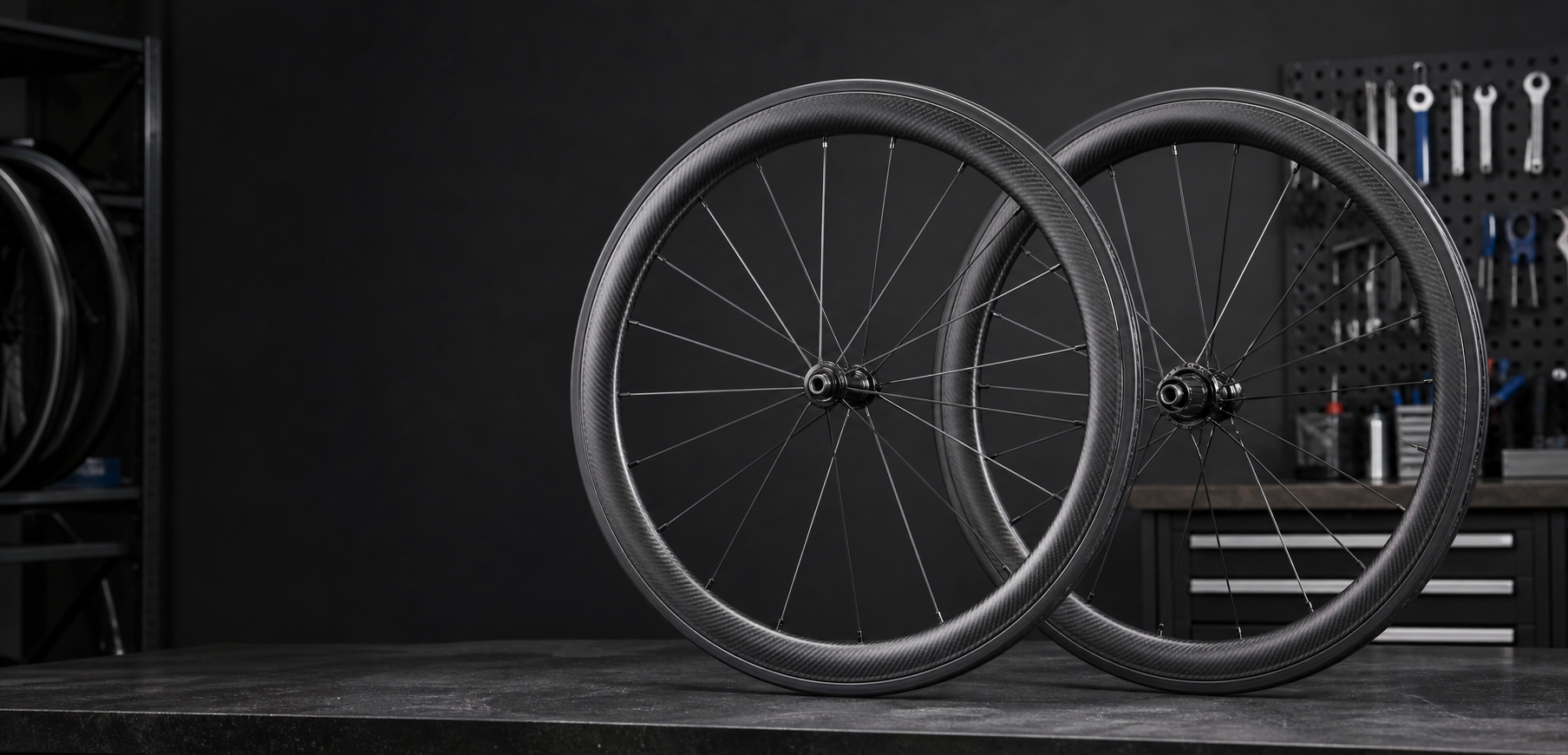
Many product photos focus on the rim profile, and a deep carbon rim can look similar at first glance whether the bike is rim brake or disc brake. The difference is not the carbon shape you notice from the side. The difference is where the braking happens.
Rim brake wheels need a brake track on the rim. Disc brake wheels usually do not use the rim for braking. That one difference changes the whole wheelset choice. It affects the hub, the rim design, the frame, and the brake hardware.
| Rim brake bike | Brake pads press on the rim. Calipers sit above the wheel near the fork crown and rear brake bridge. |
|---|---|
| Disc brake bike | A rotor sits at the hub. A caliper squeezes the rotor, not the rim. |
| Still unsure | Send a side photo of the bike and a close photo of both brakes before ordering. |
Check both front and rear
Most road bikes use the same brake type front and rear, but check both ends anyway. Look at the front fork first because it is usually easier to see. Then check the rear wheel near the seatstays. If you see pads touching the rim on both wheels, you are looking at a rim brake road bike.
Also check that the bike is a road bike using 700C wheels. Some older bikes, small frames, or unusual builds can use different wheel sizes. If your current tire says 700x23C, 700x25C, or 700x28C, that is a useful sign, but the brake system still needs to be confirmed separately.
Look for the brake track
A rim brake wheel has a visible braking surface around the rim sidewall. On alloy rims, it is often a machined silver or darker strip. On carbon rim brake wheels, the brake track is part of the carbon rim surface and should be used with suitable carbon rim brake pads.
If your current wheels have no rim braking surface and the bike stops by squeezing rotors at the hub, you are in disc brake territory. That is outside this store’s current wheelset focus.
What to send if you want help
A good fit-check message is simple. Send one full-bike side photo, one close-up of the front brake, one close-up of the rear brake, and one photo of the tire size printed on the sidewall. If you already know the bike model and year, include that too.
This avoids the most preventable wrong order. It also lets support catch other issues, such as very tight caliper clearance or an unusual tire setup.
After brake type, check the rest
Confirming rim brakes is only step one. You still need to check frame clearance, brake caliper clearance, tire size, cassette, freehub, and rim depth. The brake type tells you whether you are in the right product category. The other checks tell you whether a specific wheelset is a good fit.
Not sure which brake type you have?
Send photos before checkout. It is much easier to confirm brake type before ordering than to fix a wrong wheelset afterward.
