
Wheel Guides
What Quality Checks Matter on Carbon Wheelsets
Jun
A carbon wheelset does not need to look expensive to be worth riding, but it does need to pass the basic quality checks. The important checks are practical: does it spin true, do the hubs feel smooth, are the brake tracks clean, are the spokes stable, and does the wheel fit the bike without drama?
Start with the rim surface
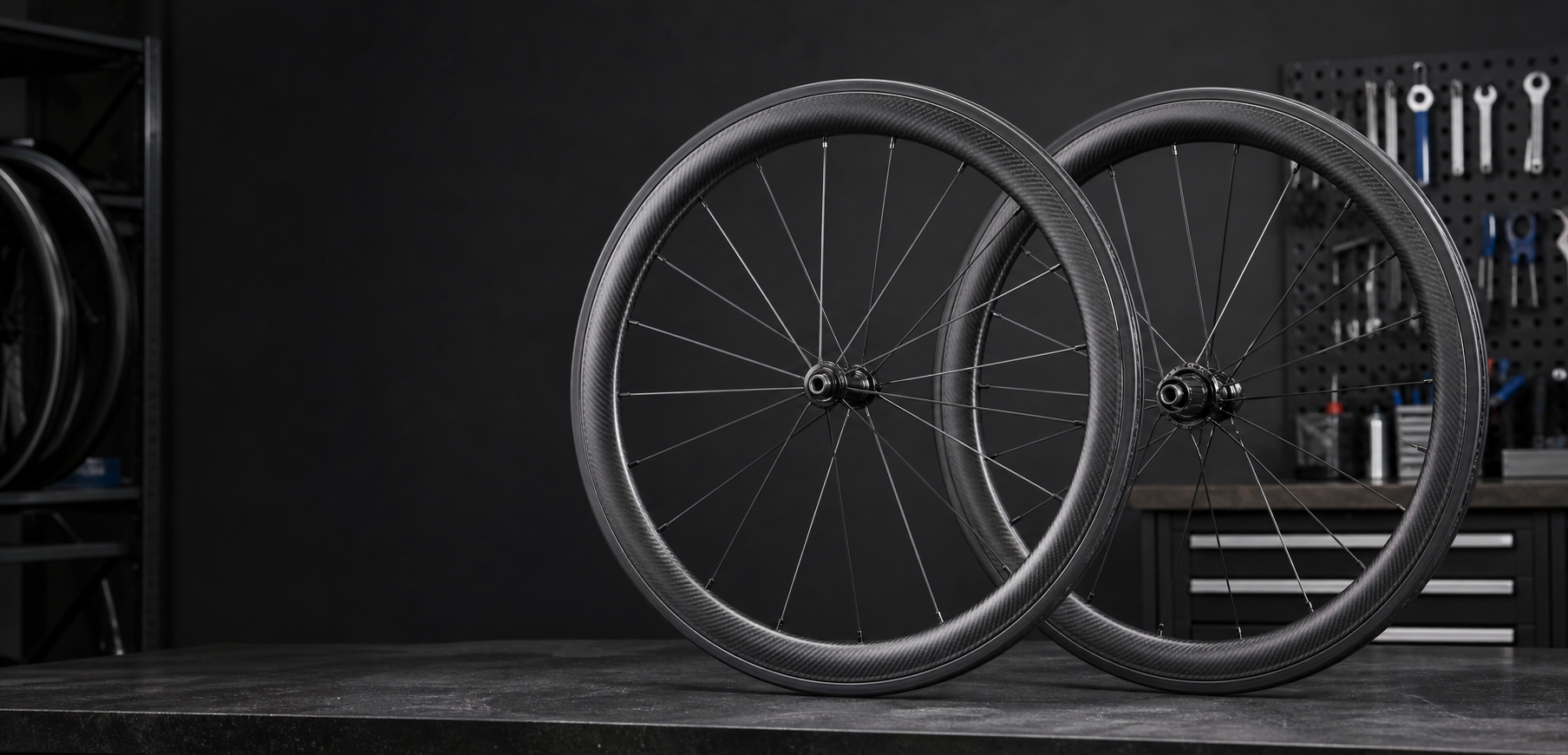
Look around the whole rim in good light. Small cosmetic marks can happen on real products, but cracks, dents, soft spots, strange bulges, or damage near spoke holes and the brake track deserve attention. Do not judge from one tiny close-up only. Look at the whole rim, then inspect the suspicious area again.
Rotate the rim slowly instead of jumping from mark to mark. A consistent surface around the wheel is reassuring. A single area that looks raised, sunken, or sharply cracked compared with the rest deserves photos before the tire is mounted.
Check the brake track carefully
On rim brake carbon wheels, the brake track is a working surface. It should be clean, even, and free from obvious damage. Before the first ride, make sure the brake pads sit on the track correctly and do not touch the tire or hang below the braking surface. Use carbon-compatible pads.
Spin and listen
Put the wheel in the bike or a stand and spin it. Watch the rim pass the brake pads. A small amount of movement may be normal, but a new wheel should not wobble heavily or rub once the brake is adjusted. Listen for scraping, clicking, or loose metallic sounds. Those sounds are worth checking before riding.
Use the brake pads as a visual reference, but do not clamp them onto the rim while checking. Open the caliper enough to see movement clearly. If one section of the rim repeatedly passes closer to the pad, mark the area mentally and inspect it again.
Feel the spokes and hubs
Spokes should not feel randomly loose. Hubs should turn smoothly without grinding or side play. The rear freehub should accept the cassette cleanly. If you are not comfortable checking these details, a local mechanic can do a quick first inspection.
You are not trying to tension the wheel by hand. You are looking for obvious outliers: one spoke that feels slack, a nipple that rattles, a hub that clunks, or a cassette that will not sit cleanly. Obvious problems should be solved before the first ride.
Quality checks that matter most
- Rim has no cracks, dents, or suspicious brake track marks.
- Wheel spins reasonably true.
- Spokes feel consistent by hand.
- Hubs spin smoothly without obvious play.
- Brake pads align correctly on the carbon track.
If anything looks questionable after delivery, take clear photos before riding and use contact. The warranty and returns guide explains what information helps.
FAQ
Should I inspect new wheels before installing tires?
Yes. Inspect the rims, brake tracks, hubs, and spokes before covering details with tires and cassette.
Is every small cosmetic mark a defect?
No. Look for structural concerns, brake track issues, or marks that come with shape changes.
Do new wheels need a mechanic check?
It is a good idea if you are not confident checking trueness, spoke tension, cassette fit, and brake setup.
Can I ride first and inspect later?
Inspect first. If there is damage, riding can make the support situation harder to understand.
