
Wheel Guides
38mm vs 50mm Wheels for Everyday Riding
Jun
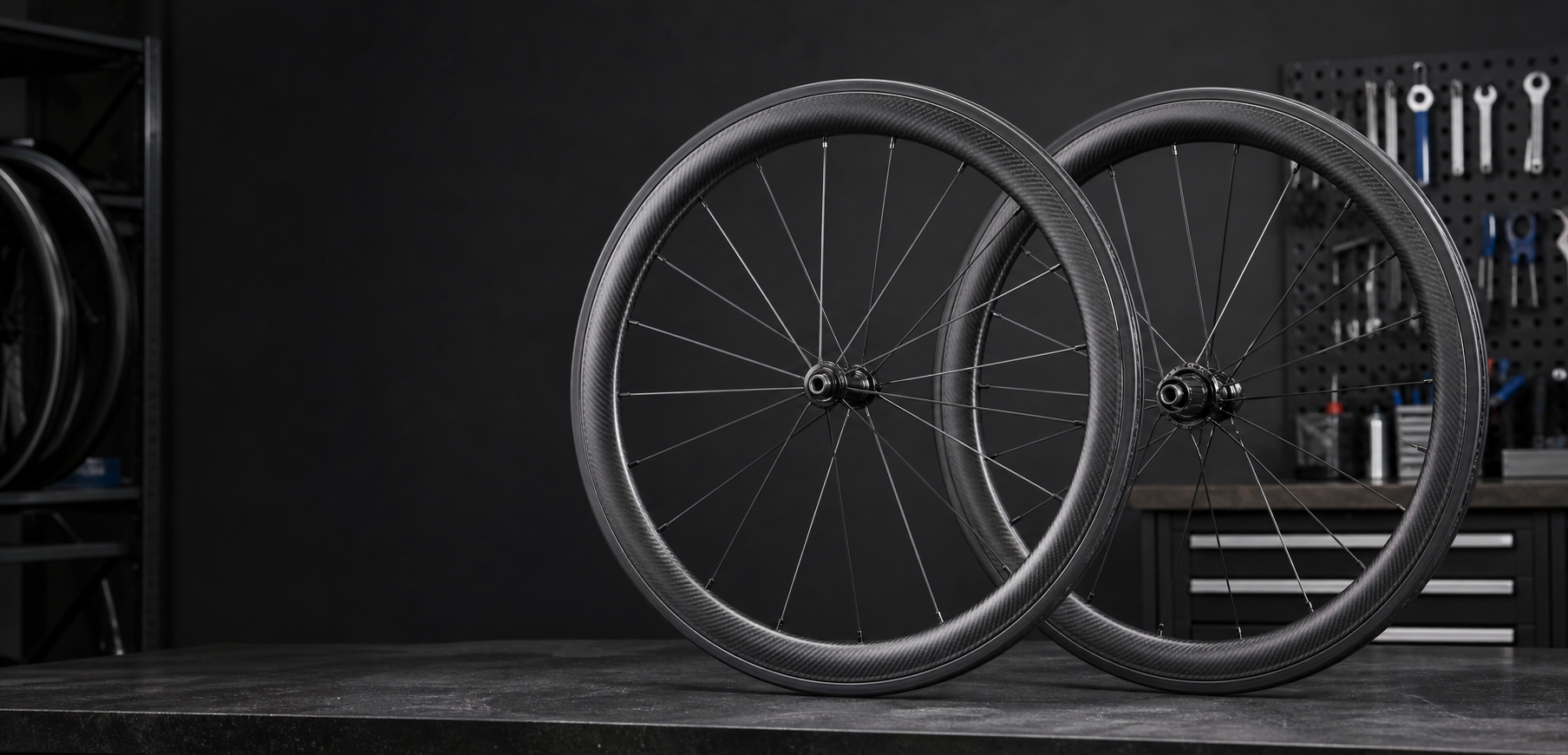
Most everyday road riders do not need an extreme rim depth. That is why 38mm and 50mm keep coming up. They both look like real carbon upgrades, both can work on rim brake road bikes, and neither turns the bike into a pure time-trial machine. The difference is in how calm or bold you want the bike to feel.
The 38mm personality
A 38mm wheel is the quieter choice, in a good way. It gives the bike a carbon profile without making every windy ride feel like a handling test. Riders who climb often, ride mixed roads, weigh less, or live in open windy areas usually find 38mm easier to use without thinking about it.
It can also suit classic rim brake frames. Some older bikes look best with a rim that is clearly modern but not visually oversized. If the bike has slim tubes, silver parts, or a more traditional road shape, 38mm can look balanced rather than forced.
The 50mm personality
A 50mm wheel has more presence. It fills the bike visually, gives a stronger aero-road look, and can feel satisfying on flatter roads and steady group rides. If your current wheels look small under the frame, 50mm is often the depth that makes the bike look properly upgraded from across the room.
The tradeoff is wind. A 50mm rim is still everyday-usable for many riders, but it will speak up more in gusts than a 38mm rim. That does not mean it is dangerous by default. It means your roads and confidence matter.
Choose by your normal ride, not your best photo
Think about the ride you do most often, not the ride you imagine when shopping. If your normal loop has exposed bridges, fast truck traffic, short steep climbs, rough shoulders, and stop-start corners, 38mm may simply get used more. If your normal loop is rolling, open, and fast, 50mm may be the more satisfying upgrade.
| 38mm suits | Mixed terrain, climbing, lighter riders, windier areas, subtle classic-road-bike builds. |
|---|---|
| 50mm suits | Flat and rolling roads, group rides, modern visual impact, riders comfortable with more sidewind feel. |
| Do not forget | Brake clearance, tire size, freehub, and pad choice matter before rim depth. |
What I would pick for a first carbon wheelset
If the rider is unsure, I usually lean 38mm. It is easier to recommend because it creates fewer surprises. But if the rider already knows they like deeper wheels, rides mostly dry open roads, and wants the bike to look meaningfully different, 50mm is not unreasonable. The wrong choice is the one bought only because a product photo looked good for ten seconds.
Depth comes after fit. Use the compatibility guide to check the practical side first. If your brake caliper or tire clearance is tight, send photos through contact. When the fit is clear, compare current choices in the shop.
FAQ
Is 50mm too deep for daily riding?
Not for everyone. It depends on wind, rider confidence, road exposure, and bike setup. Many riders use 50mm daily, but 38mm is usually calmer.
Is 38mm enough to feel like an upgrade?
Yes. It still changes the bike’s look and feel, especially compared with shallow stock alloy wheels.
Which depth is better for climbing?
For mixed climbing and windy descents, 38mm is often the safer recommendation. Weight, tires, and rider pacing also matter.
Should front and rear depths be different?
Some riders like a shallower front and deeper rear, but matched 38mm or matched 50mm is simpler for most value-focused buyers.
