
Wheel Guides
Carbon Wheels vs Alloy Wheels for Rim Brake Bikes
Jun
There is no need to turn carbon versus alloy into a loyalty test. Alloy wheels are still useful, especially on rim brake bikes. Carbon wheels are still one of the easiest ways to make an older road bike feel more current. The better choice is the one that matches your roads, your maintenance habits, and how much upgrade feel you actually want.
The honest case for alloy
Alloy rim brake wheels are familiar. Most riders already know the braking feel, and most local shops know exactly how to service them. They are easy to recommend for winter bikes, rough-weather commuting, training wheels, and riders who want the least dramatic ownership experience.
Alloy also has a braking advantage in messy conditions. Wet braking can still be imperfect, but the feel is usually more familiar than carbon. If you ride in frequent rain, gritty roads, or steep stop-start city routes, alloy can be the less fussy choice.
The honest case for carbon
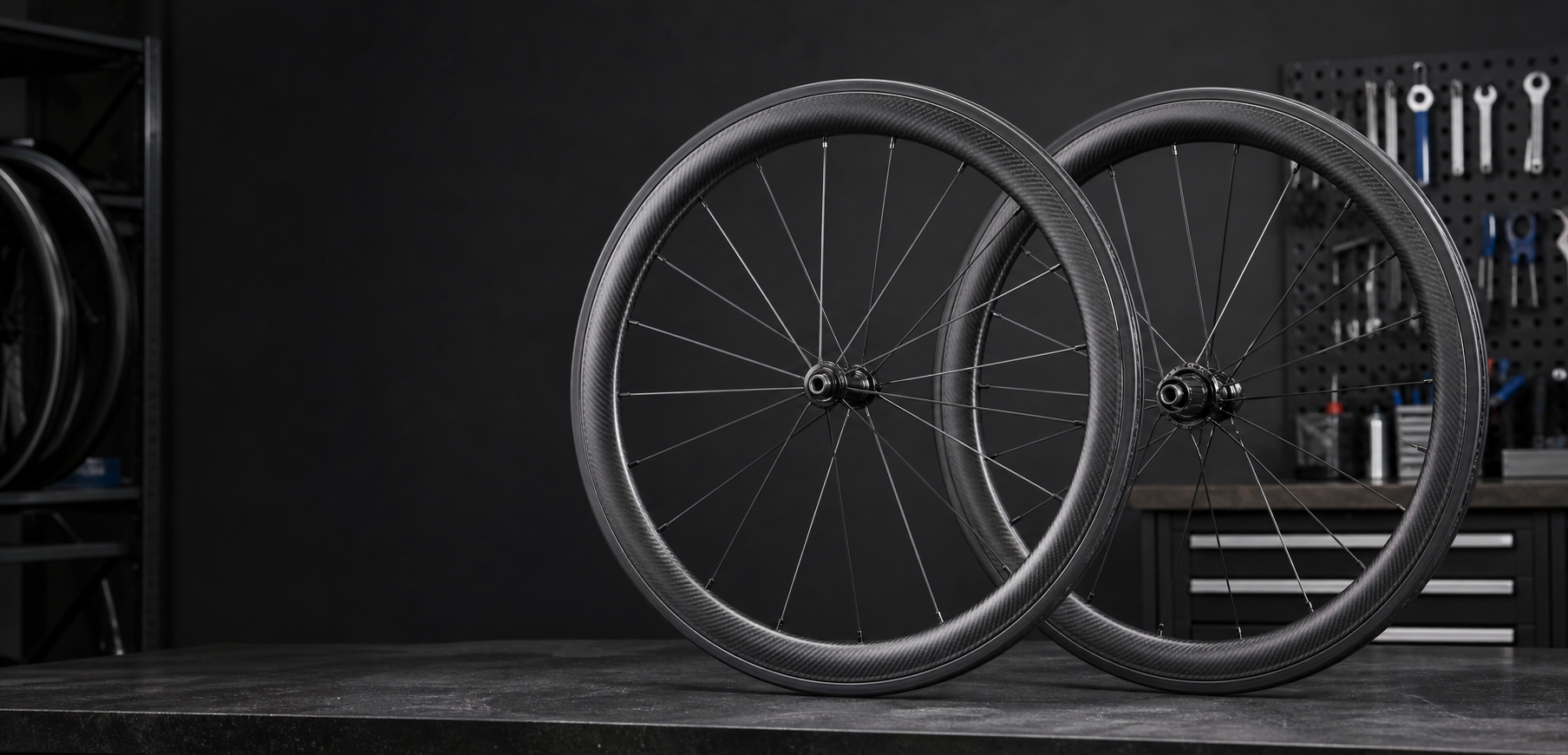
Carbon wheels are about more than weight. A deeper carbon rim changes the look of a rim brake road bike immediately. For many riders, that visual change is part of the value. A bike that felt dated can suddenly look sharper, cleaner, and more intentional without replacing a frame that still fits well.
The ride can feel different too. A good carbon wheelset can feel more direct when accelerating, and a deeper profile can feel steadier on fast open roads. The point is not that every carbon wheel is magic. The point is that carbon gives a type of upgrade that alloy usually does not: depth, profile, and a modern road-bike presence.
The braking difference you should respect
Carbon rim brake wheels need the right pads and a little more discipline. Do not move old alloy-rim pads onto a carbon brake track. Tiny metal pieces trapped in the pad can score the track, and the compound may not behave correctly. Use carbon-compatible pads, keep the track clean, and expect wet braking to need more room.
If your rides include long descents, carbon is still possible, but your technique matters. Brake before corners, release when safe, and avoid dragging the brakes for long periods. If that sounds annoying for your normal roads, alloy may fit your life better.
| Choose alloy when | You want simple braking, local service comfort, and low-fuss bad-weather use. |
|---|---|
| Choose carbon when | You want a visible upgrade, deeper rim profile, and a fresher feel from an existing rim brake bike. |
| The shared rule | Fit, brake setup, tire choice, and rider use matter more than the material label alone. |
Where a 299 USD carbon wheelset fits
A factory-direct 299 USD carbon wheelset is for the rider who likes their rim brake bike and wants a real upgrade without premium-brand spending. It is not pretending to be every race wheel in the world. It is a value choice: new wheels, direct purchase, free shipping, and a modern look for a bike that still deserves miles.
Start with the compatibility guide so you do not buy the wrong freehub, tire setup, or clearance. If the fit is clear, compare current options in the shop. If your bike is unusual, send photos through contact first.
FAQ
Are carbon wheels always faster than alloy wheels?
No. Depth, tires, rider position, bearings, and terrain all matter. Carbon often gives a deeper aero-style profile, but it is not a guaranteed speed upgrade for every rider.
Should I keep alloy wheels after buying carbon wheels?
If you have space, yes. Many riders keep alloy wheels for wet days, winter roads, or trainer use, then use carbon wheels for nicer rides.
Will carbon wheels make an old rim brake bike worth keeping?
Often, yes, if the frame fits and the drivetrain is still healthy. Wheels are one of the most visible upgrades on an older road bike.
What is the first thing to change when switching to carbon?
Change the brake pads. Use pads made for carbon rims, bed them in carefully, and check caliper alignment before the first ride.
